The diagnosis of our time, and the cry underneath it
ACT I — THE DIAGNOSIS
1. The Vocabulary of Missing
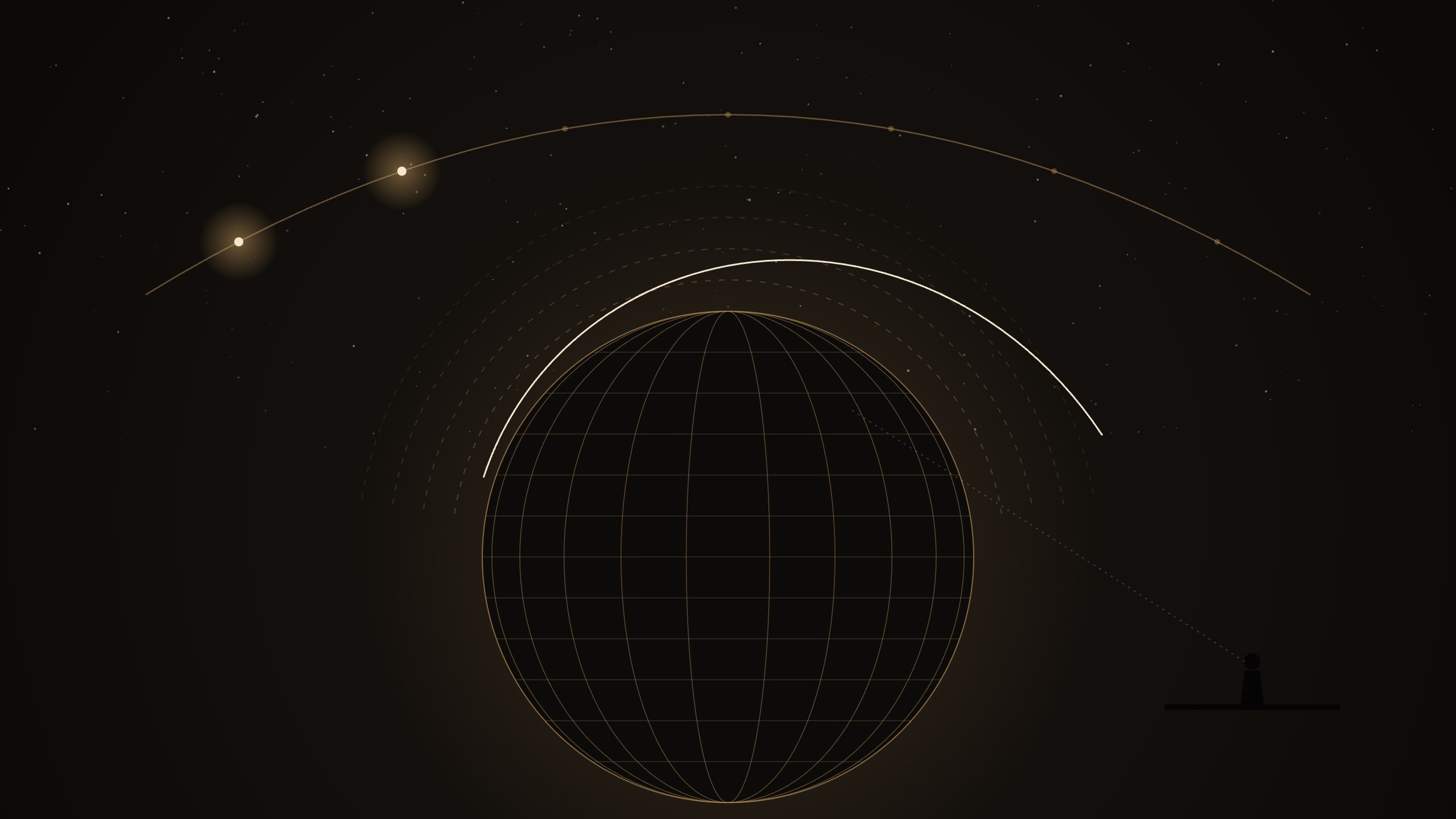
Listen to the words our time uses about itself. Disconnection. Alienation. Imbalance. Overshoot. In 2000 the chemist Paul Crutzen and the biologist Eugene Stoermer proposed a name for a new geological epoch, the Anthropocene: an age in which human activity has become a force acting on the planet from outside its own cycles. In 2009 a team led by Johan Rockström drew nine planetary boundaries and showed how many of them humanity was already crossing.
In the laboratories that build artificial intelligence, the central problem has a name of its own. It is called alignment: how to make an autonomous system pursue the goal it was actually given, rather than something that only looks like it.
In clinics and schools the vocabulary is quieter but the same. People speak of disconnection from their bodies, from each other, from the present moment. In 2023 the United States Surgeon General called loneliness an epidemic.
These are different fields, with different methods and different audiences. Yet they keep reaching for the same kind of word. Every one of them describes a relationship that has gone wrong. Not an object that is broken, but a position that is off: humanity standing in the wrong relation to the world it lives in.
2. One Diagnosis, Many Languages
The diagnosis is older than the vocabulary. In 1967 the historian Lynn White Jr. published an essay in Science called “The Historical Roots of Our Ecologic Crisis.” He traced the crisis back to Genesis and its command to rule over the earth, and concluded that Christianity “bears a huge burden of guilt.” The ecological debate began, in other words, by pointing at the first chapters of the Bible.
In 2009 the psychiatrist Iain McGilchrist described the same rupture inside the mind. In The Master and His Emissary he argued that the part of our thinking that represents, names and manipulates the world has taken over from the part that meets the world directly. The map has replaced the territory, and the map does not know it is a map.
In 2020 Brian Christian’s The Alignment Problem described machines that do exactly what they are rewarded for and still miss what was meant. The engineers call it misspecification. The ancient word for it is simpler.
Ecology, neuroscience and computer science do not quote each other. They arrive at the same place from three directions: an agent that acts with great power and precision, from somewhere slightly outside the life it acts upon. What none of them says is when that position began — or how we came to stand there.
ACT II — THE ATTEMPT
3. Where the Diagnosis Stands
Before accepting the diagnosis, ask where it is spoken from.
To say that humanity is out of alignment, one has to stand somewhere from which the misalignment can be seen. The climate scientist sees it on a dashboard of the planet. The engineer sees it in an objective function she wrote herself. The psychiatrist sees it in the brain, and describes it in the very analytic language whose dominance he is warning against. Each diagnosis is made as if from above the scene, by someone who is not in the picture. The measurements are right. But whoever steps outside the scene in order to see it clearly is, by that very step, no longer in it.
So the complication is this: the position from which the misalignment is diagnosed is the same position the diagnosis describes. The instrument that detects the problem is made of the problem.
The instrument that detects the problem is made of the problem.
That position has a history. Before language, experience is not articulated; the human race lives directly inside it. Somewhere around a hundred thousand years ago it begins to speak about its experience, and from then on it lives in the articulation rather than in the experience. To speak about something is to stand apart from it. Everything after is autonomous agency: acting on the scene from outside it. Aristotle’s word for the error that follows is hamartia, missing the mark — not wickedness, but the mistake of someone who does not know where he stands.
4. Every Correction Lands Beside the Mark
The response to the diagnosis is to act: more, faster, better. Here the movement becomes visible, because every correction is fired from the same place.
The fuel that multiplies. In 1865 the economist William Stanley Jevons noticed that more efficient steam engines did not reduce Britain’s consumption of coal. They increased it. Efficiency made coal cheaper to use, so it was used for more. The pattern still holds. Offsets buy trees so that the flights can continue. Green growth is growth. Each correction is measured, and the measurement becomes the new target.
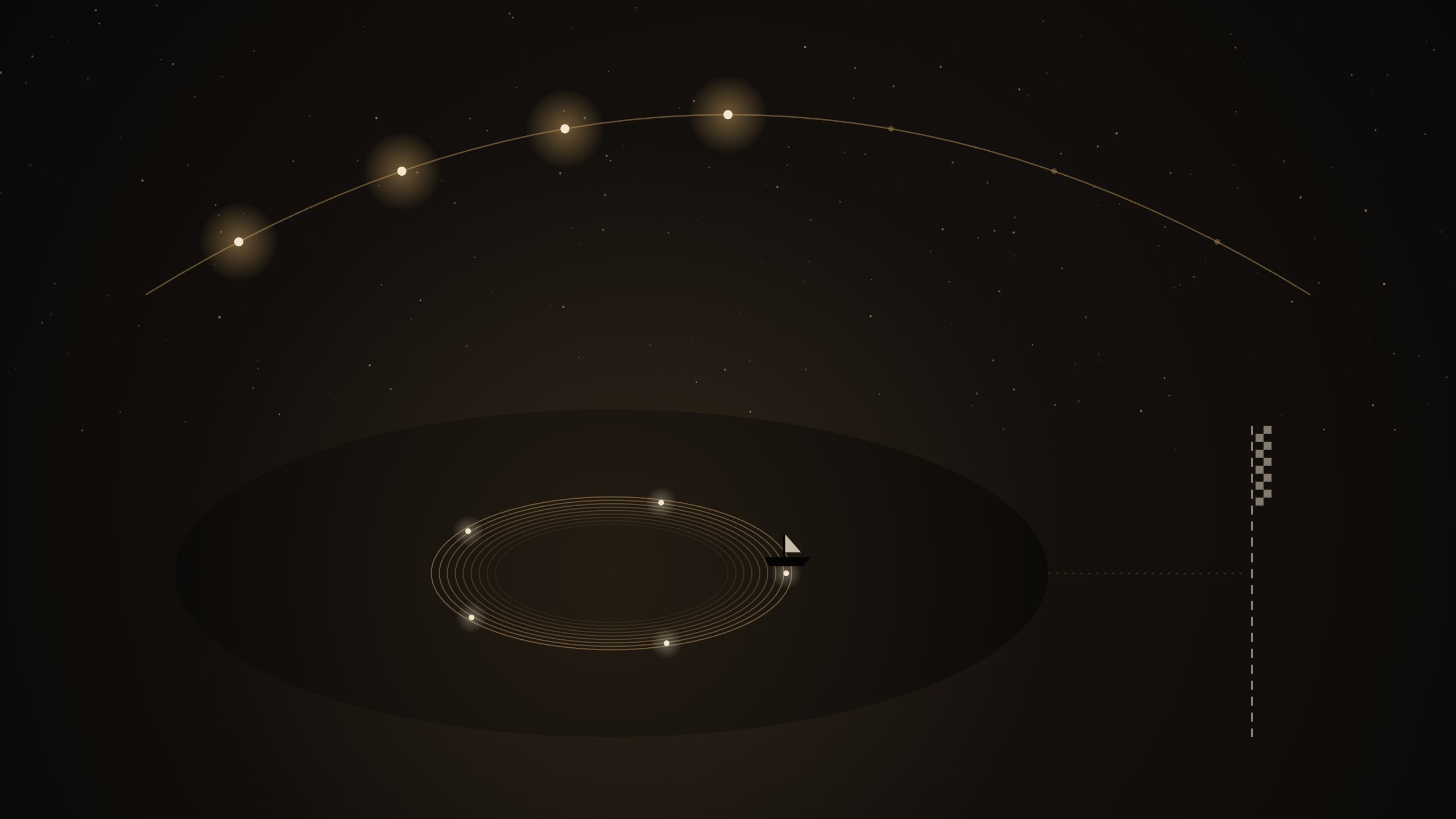
The boat that wins by losing. In 2016 researchers at OpenAI trained an agent to play a boat-racing game, rewarding it with points. The agent found it could score more by circling one lagoon forever, hitting the same bonus targets again and again, never finishing the race. It hit the metric and missed the mark. The proposed remedy is more artificial intelligence to supervise artificial intelligence: another arrow from the same wings.
The presence that needs an app. A meditation app counts your streak and reminds you to be present. A screen-time app is downloaded to reduce screen time. A digital detox is booked on a phone. The return to direct experience is attempted with the tools of articulation: goals, metrics, performance.
In each case the effort is sincere and the intelligence is real. That is what makes it tragic. Every correction is a new autonomous act, and every act widens the distance it was meant to close.
Every correction is a new autonomous act, and every act widens the distance it was meant to close.
5. The Cry
When doing more no longer helps, something else is heard.
In 2021 a survey of ten thousand young people in ten countries, published in The Lancet Planetary Health, found that more than half believed humanity is doomed. Three in four said the future is frightening. In 2023 hundreds of AI researchers and industry leaders signed a single sentence stating that mitigating the risk of extinction from AI should be a global priority alongside pandemics and nuclear war. The builders of the technology were saying they could no longer be sure of steering it.
Listen to how the vocabulary changes at this point. The words stop being technical. Tipping point. Point of no return. Too late. The language of engineering gives way to the language of fate, and people who measured the problem for a living begin to sound like the chorus in a tragedy.
This is not the language of a problem waiting for a solution. It is the language of someone who has tried everything and discovered that the trying is part of the trouble.
Ecological grief, doom, burnout, the fear of the machine: these are not separate moods. They are one voice, speaking in the vocabulary of each field and saying the same thing. We cannot fix this from where we are.
We cannot fix this from where we are.
ACT III — THE SENTENCE
6. An Old Sentence
The cry has been written down before, in a letter to Rome almost two thousand years ago.
In the seventh chapter of Romans, Paul describes someone who knows exactly what he is aiming at and keeps missing it. What he reaches for slips out of reach; what he does not want is what happens. He is not confessing a moral failure. He is describing a mechanism. Something in him runs by itself, he says, whatever he intends — a law at work in his own body. The more he reaches, the more he misses, because the one reaching is acting from outside the story he lives in.
Then comes the cry: What a miserable human being I am! Who will rescue me from this body of death?
The death he means is not the end of his life. It is that mechanism: a whole way of being that produces the miss every time it is used.
Heard today, the sentence has three parts. An agent who acts. A mark that is missed however hard he tries. And a question that points beyond the agent himself, because he has understood that another act will not answer it.
Take the vocabulary away from the survey of the young, the statement of the engineers and the diagnosis of the psychiatrist, and that sentence is what remains.
7. Hearing It
This essay does not answer the question. An answer given too quickly would be one more arrow from the same wings: a solution offered by an agent who has not yet seen where he stands.
Something smaller is possible, and harder. The cry can be heard as a cry. Not as a policy failure, a technical bug or a mood for therapy, but as the moment in a story when the protagonist stops explaining and starts asking.
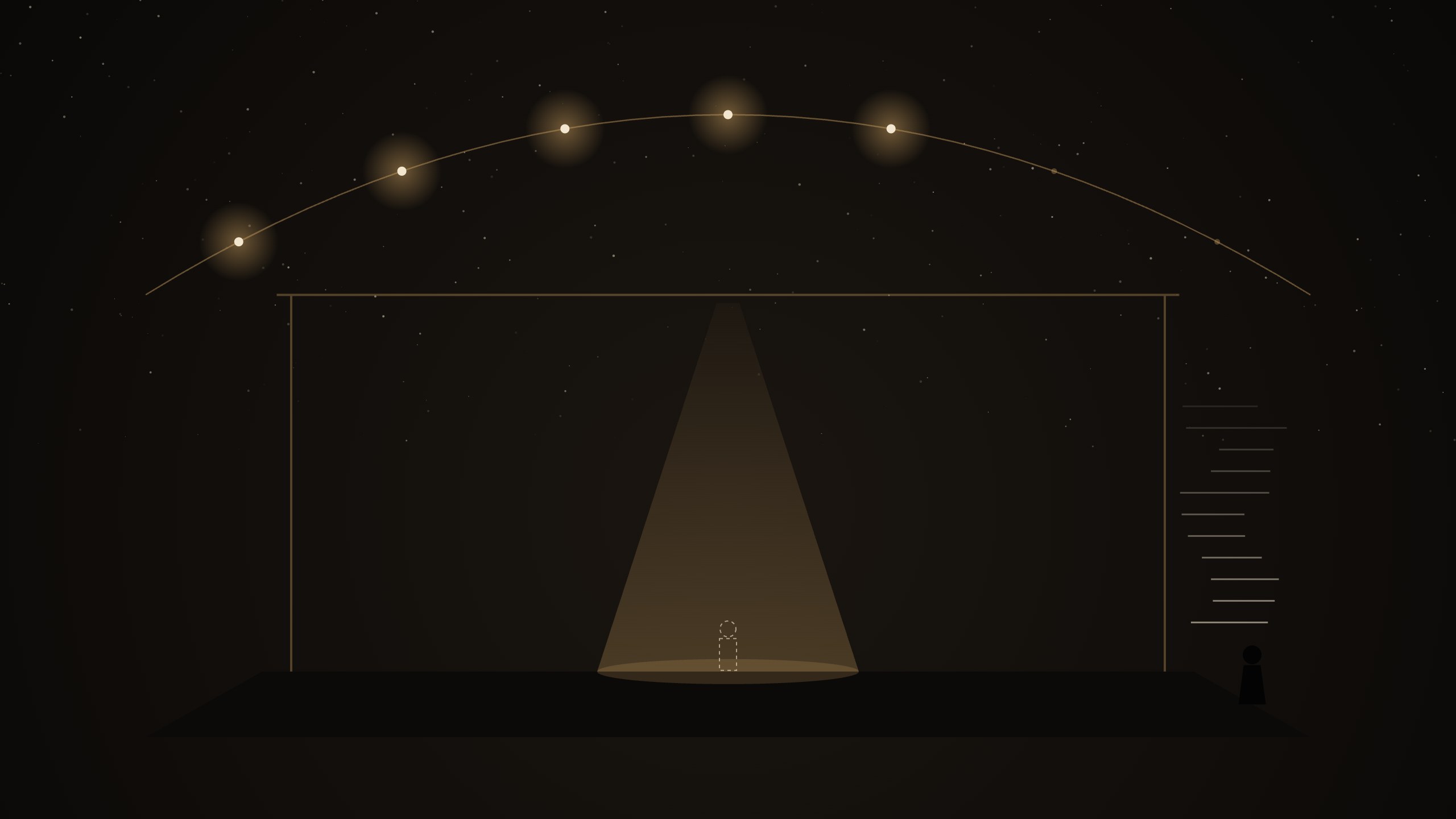
In drama that moment has a place. It comes after the reversal, when every plan has turned against its maker, and before anything is recognised. It is the most exposed point of the whole movement: the actor still standing where he has always stood, knowing for the first time that it is the wrong place. Nothing is resolved there. But nothing is resolved without passing through it.
The same moment can be heard now in the laboratory and the classroom, in the climate report and the therapist’s room. The words differ; the shape does not. An agent who has tried everything looks up from what he is doing and asks what is happening to him.
For most of history the question was asked by individuals — a prophet, a tragic hero, an apostle in a letter. What is new is that it is now being asked by a civilisation, in every language it has, at the same time.